


Meta title: How Big Is 3mm? 12 Everyday Objects for Comparison
Meta description: Wondering how big 3mm is? See 3mm in inches, a conversion chart, and everyday objects of the same size, plus easy ways to measure it without a ruler.
You see “3mm” on a screw packet, a jewelry listing, a phone case, or a sheet of craft foam. Then you stop. Is that tiny? Is it thick enough? Will it fit?
Three millimeters is easy to read and hard to picture. It’s too small to feel obvious but too common to ignore. The good news is that you already own plenty of things that measure about 3mm, and you can use them as a mental ruler.
This guide shows how big 3mm is, how it converts to inches and other units, and which everyday objects match it. You’ll also learn how to measure 3mm without a ruler, clear up a few myths, and find quick answers in the FAQ section.
How Big Is 3mm?
Three millimeters is 0.3 centimeters, 0.003 meters, or about 0.118 inches. That’s just under one-eighth of an inch.
The quickest way to see it is to look at a metric ruler. The small lines between the numbers are millimeters, and every tenth line marks a centimeter. Count three of those gaps and you have 3mm.
A few quick comparisons help:
- It’s about the thickness of two stacked U.S. pennies.
- It’s roughly the length of a sesame seed.
- It’s about one-fifth the width of an AA battery.
- It’s around 40 human hairs laid side by side.
So 3mm is small, but you can see it clearly with the naked eye and hold an object that thick between your finger and thumb. That’s why it shows up so often in everyday design.
Why 3mm Matters More Than You’d Think
Millimeters are the language of small things. Engineers, jewelers, doctors, woodworkers, and hobbyists use them because fractions of an inch get messy at this scale. A 3mm difference can decide whether a part slides into place or jams, whether a gem sits securely in a setting, or whether a cable fits through a hole in a desk.
If you’ve ever bought the wrong size of something online, you already know what a few millimeters can cost.
3mm Conversion Chart
One inch equals exactly 25.4 millimeters. To convert millimeters to inches, divide by 25.4.
For 3mm: 3 ÷ 25.4 = 0.1181 inches.
3mm in Other Units
| Unit | Value for 3mm |
| Millimeters | 3 mm |
| Centimeters | 0.3 cm |
| Meters | 0.003 m |
| Micrometers (microns) | 3,000 µm |
| Inches (decimal) | 0.1181 in |
| Inches (nearest common fraction) | 1/8 in (0.125 in) |
| Feet | 0.00984 ft |
| Typographic points | about 8.5 pt |
| Pixels at 96 PPI (screen) | about 11.3 px |
| Pixels at 300 DPI (print) | about 35.4 px |
3mm Next to Its Neighbors
This table helps when you’re choosing between nearby sizes, like drill bits, jewelry, or screws.
| Millimeters | Inches (decimal) | Closest common fraction |
| 1 mm | 0.0394 in | 3/64 in |
| 2 mm | 0.0787 in | 5/64 in |
| 3 mm | 0.1181 in | 1/8 in |
| 4 mm | 0.1575 in | 5/32 in |
| 5 mm | 0.1969 in | 3/16 in |
| 6 mm | 0.2362 in | 1/4 in |
| 10 mm | 0.3937 in | 3/8 in |
A Quick Note on Fractions
Many people assume 3mm equals 3/32 of an inch. It doesn’t. Three thirty-seconds of an inch is only 0.094 inches, about 2.4mm. The closest standard fraction is 1/8 inch, which is 3.175mm. That’s about 0.175mm too large, a gap you’d barely notice on a craft project but would notice on a precision part. For tight tolerances, use the decimal value (0.1181 inches).
Common Things That Are About 3mm in Size
Some of these objects match 3mm exactly. Others land close enough to give you a reliable mental picture. Where an item varies by brand or model, I’ve said so.
How Big Is 3mm? The Quick Visual Summary
| Object | Approximate 3mm match |
| Four stacked credit cards | About 3.04 mm thick |
| Pencil tip | About 2–3 mm wide |
| Small shirt button | About 2–4 mm thick |
| Grain of rice | About 2–3 mm at its widest |
| Two pennies | About 3.04 mm thick |
| M3 screw | 3 mm thread diameter |
| Round jewelry bead | 3 mm diameter |
| Thin earphone cable | About 1.5–3 mm |
| Phone charging cable | About 3–4 mm |
| Mechanical pencil tip | About 2–3 mm |
| LEGO plate | 3.2 mm thick |
| Craft foam sheet | 3 mm (common size) |
| Jewelry chain | 3 mm wide |
| Heavy sewing needle | About 2–3 mm |
Now let’s go through them one at a time.
1. Stacked Credit Cards

A standard bank card is about 0.76mm thick, set by the ISO/IEC 7810 standard for ID-1 cards. Your debit card, loyalty card, and driver’s license all match closely.
Stack four and you get roughly 3.04mm. Two cards only give you about 1.5mm, so you need to double that. This is one of the most reliable comparisons because almost everyone has a few cards in their wallet, and four of them make a handy emergency spacer.
2. Pencil Tip Diameter

The graphite core of a standard wooden pencil is about 2mm across. As the tip wears down and flattens, the contact point often reaches 2 to 3mm.
Treat this one as a rough guide. Pencils differ by hardness and brand, and a fresh sharp point is far thinner than a worn one. Still, a slightly blunt pencil pressed on paper leaves a mark close to 3mm wide.
3. Small Button Thickness

Look at the shirt buttons on your clothes. Many are between 2mm and 4mm thick, with plain flat four-hole styles sitting right around 3mm.
Coat buttons and decorative ones run thicker. The simple buttons on dress shirts and blouses are the better reference.
4. Grain of Rice Thickness

Long-grain rice is slender. Its length ranges from about 5mm to 9mm depending on the variety, but its width and thickness are much smaller, typically 2 to 3mm.
Hold a single grain sideways and you’re looking at roughly 3mm across its widest point. It’s an easy kitchen comparison.
5. Coin Stack
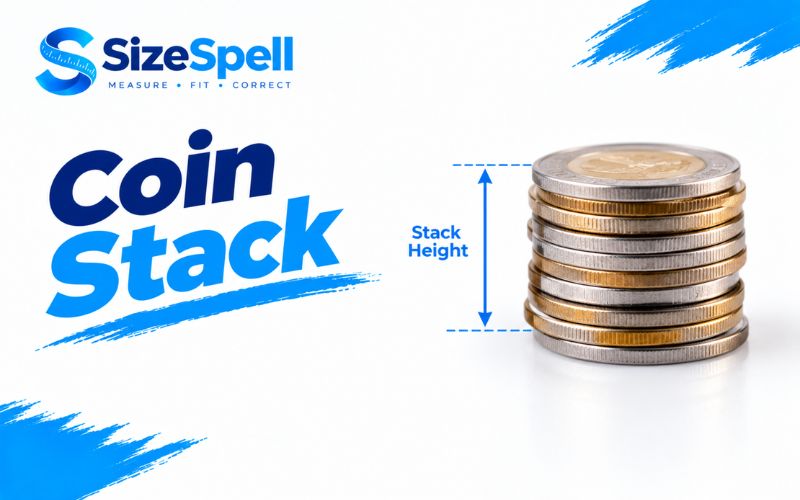
Coins are manufactured to strict thickness specs, which makes them great reference tools. A U.S. penny is about 1.52mm thick, so two stacked measure about 3.04mm.
A few other combinations get you close:
- A quarter (1.75mm) plus a dime (1.35mm) is about 3.10mm.
- A nickel (1.95mm) plus a dime (1.35mm) is about 3.30mm.
- Two dimes are about 2.70mm.
Two pennies is the closest match.
6. Tiny Screw Head
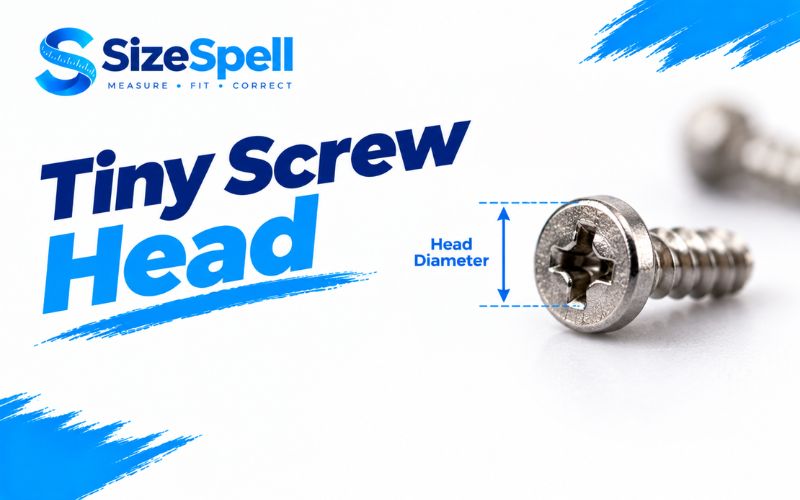
The “M3” in a screw’s name means its thread diameter is 3mm. M3 screws are everywhere: laptops, 3D printers, computer cases, cameras, and small appliances.
The head of an M3 socket cap screw is also 3mm tall, with a head diameter of 5.5mm. If you’ve ever built a PC or assembled a 3D printer, you’ve almost certainly held a few.
7. Jewelry Bead
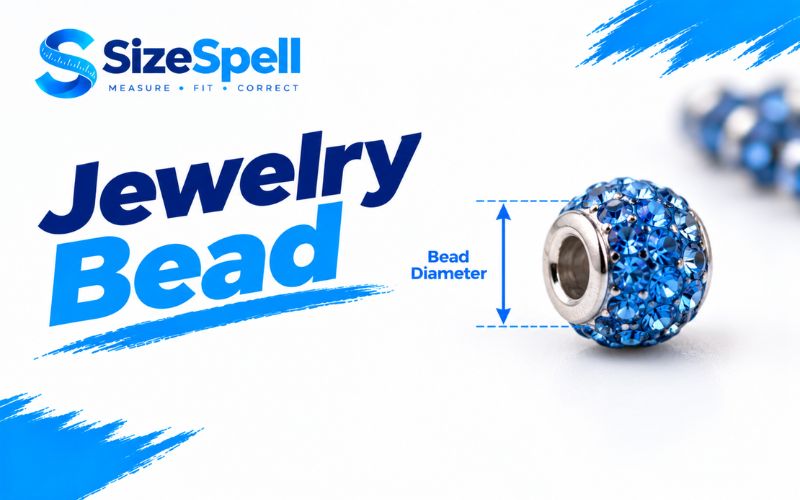
Round beads of 3mm are a standard size in jewelry making. They’re small enough for delicate bracelets and anklets, yet big enough to see clearly and string without special tools. Size 8/0 seed beads also come in at roughly 3mm.
Listings usually show bead diameter in millimeters, so recognizing this size helps you shop with confidence.
8. Earphone Wire Thickness
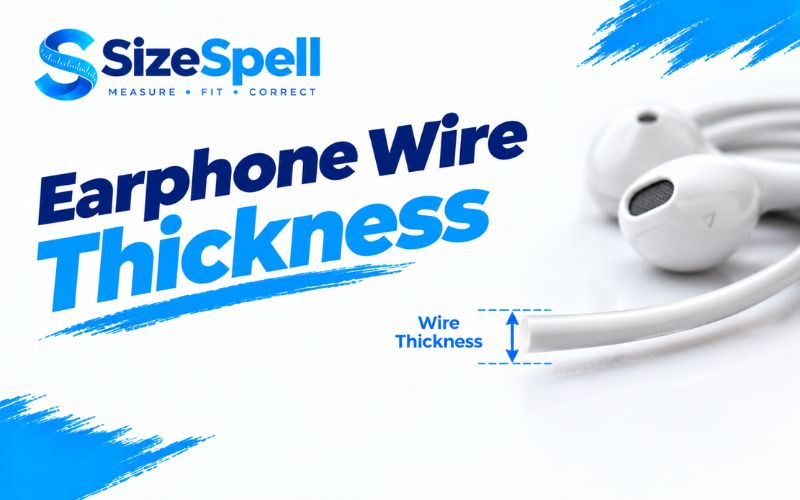
Wired earbud cables vary quite a bit. Thin, flexible ones can be 1.5mm or less, while sturdier braided cables get closer to 3mm.
If your cable feels like a thick thread, it’s probably nearer 2mm. A heavy-duty braided one is a better 3mm match. Because of the range, check it against a ruler if you need accuracy.
9. Phone Charging Cable
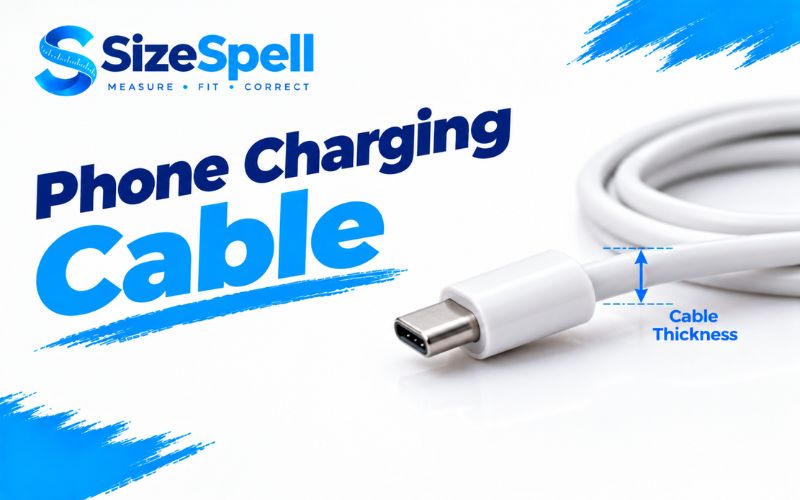
Most common charging cables, such as USB-C and Lightning, have an outer diameter of around 3 to 4mm. Premium braided cables can be thicker still.
You probably have one within arm’s reach, so pinch it, hold it against a ruler, and lock in a feel for 3 to 4mm.
10. Mechanical Pencil Tip Guard

The metal tip on a mechanical pencil is a narrow cone that guides the lead. On many 0.5mm pencils, the end of the sleeve is around 2mm across and widens toward 3mm where the cone meets the barrel.
Designs differ between brands, so use this as an approximation.
11. Small LEGO Piece Thickness
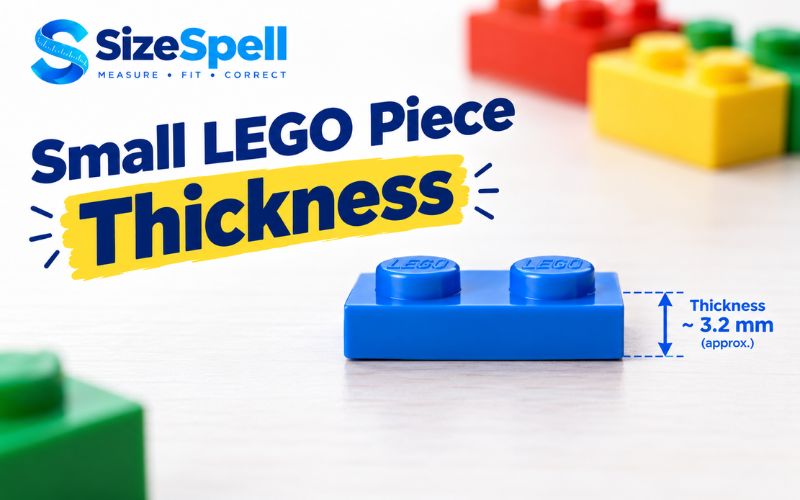
A standard LEGO plate, the flat thin piece, is 3.2mm tall. Three plates stacked equal the height of a regular brick, which is 9.6mm.
If you have a plate in a toy box, you have a near-perfect 3mm reference. It’s only about 0.2mm over.
12. Thin Craft Foam Sheet

Craft foam sheets, often made from EVA foam, come in several thicknesses. 2mm is standard for most kids’ crafts, and 3mm is a very common step up for costumes, cosplay, and DIY projects.
When a pack says “3mm foam,” picture something noticeably sturdier than paper but still easy to cut with scissors or a craft knife.
What Does 3mm Look Like Compared to Everyday Objects?
Comparing 3mm to bigger and smaller objects shows where it sits on the scale of everyday sizes.
| Object | Typical size | How 3mm compares |
| Human hair | About 0.07 mm | 3mm is roughly 40 hairs wide |
| Grain of table salt | About 0.3 mm | 3mm is about 10 grains in a row |
| Sheet of printer paper | About 0.1 mm | 30 sheets stacked reach about 3mm |
| Standard credit card | 0.76 mm thick | 3mm is about 4 cards thick |
| U.S. penny | 19.05 mm wide | 3mm is about one-sixth of its width |
| AA battery | About 14.5 mm wide | 3mm is about one-fifth of its width |
| Standard ruler | 1 cm = 10 mm | 3mm is three small tick marks |
Feeling 3mm in Your Hand
Take a penny and look at its edge. That edge is about 1.5mm. Now imagine a second penny on top. That’s your 3mm.
Pinch two pennies between your thumb and index finger and remember the feel. The next time a listing says “3mm thick,” that memory is more useful than the number.
3mm in Different Fields
- Jewelry: Beads, gemstones, and chain widths.
- Electronics: M3 screws, standoffs, and cable thickness.
- Woodworking and DIY: 3mm plywood, hardboard, and drill bits.
- Crafts: Foam sheets, felt, and acrylic sheets.
- Medicine: Imaging reports describe small findings in millimeters. A 3mm measurement on a scan only means something in context, so ask your doctor what it means for you.
- Printing: Bleed margins are often about 3mm.
How to Measure 3mm Without a Ruler
No ruler nearby? You can still get a reliable 3mm. Here are the methods, from most to least accurate.
Method 1: Stack Coins or Cards
Coins and bank cards are made to tight specs, so this is the most accurate no-tool method. Stack two U.S. pennies flat, or four credit cards, and hold the stack against whatever you’re measuring. Either gets you within a fraction of a millimeter.
Method 2: Use the 1/8-Inch Mark
If you only have an imperial tape measure, find the 1/8-inch mark. That’s 3.175mm, slightly bigger than 3mm. It works for rough jobs. For tight-fitting parts, use the coin method instead.
Method 3: Count Sheets of Paper
Standard office paper is about 0.1mm thick, so 30 sheets give you close to 3mm. Paper weight varies, so thicker or lighter stock will throw the count off.
Method 4: Use Digital Calipers
If you measure small things often, digital calipers are worth owning. They read to 0.01mm and switch between millimeters and inches with one button. Close the jaws and zero the display before each measurement, because a closed reading other than 0.00 means every number will be off.
Method 5: Print a Scale at 100%
You can print a millimeter ruler from the web. Print at 100% size with “fit to page” turned off, then check it against an object of known size, like a credit card, which is 85.6mm long and 53.98mm wide. If the card matches the printed scale, you’re good.
Method 6: Use a Phone Measuring App
Phone ruler and augmented-reality apps are fine for centimeters but less trustworthy at 3mm, where tiny errors in camera angle and distance become a big share of the length. Use them for a ballpark, then confirm with a physical reference.
Tips for Cleaner Readings
- Look straight on. Viewing a ruler at an angle causes parallax error.
- Start from the 1 cm line, not the end. Worn ruler ends add error.
- Measure twice. Especially for parts that need to fit.
- Go light on soft materials. Foam compresses under pressure.
Common Misconceptions About 3mm
1. 3mm Is Invisible
It isn’t. Most people can see a 3mm object easily, and you can pick out features far smaller under good light. What’s hard is judging 3mm by eye. You can spot it, but you can’t tell 3mm from 4mm without a reference, which is why the objects above help.
2. Millimeters Are Difficult to Understand
Millimeters feel hard mostly because people compare them with inches and feet, which don’t divide evenly. The metric system runs on tens: 10 millimeters in a centimeter, 100 centimeters in a meter. Anchor on a few references, like two pennies for 3mm, and you just count.
3. Tiny Measurements Are Unimportant
This is the costliest myth. A few millimeters can ruin a project:
- A shelf bracket drilled 3mm off leaves a visible tilt.
- A phone case 3mm too thin may not clip on.
- A hole 3mm too small won’t take the screw.
- A print with no 3mm bleed can show white edges after trimming.
Frequently Asked Questions About 3mm
How big is 3mm in inches?
3mm equals about 0.1181 inches. Divide 3 by 25.4, since one inch is exactly 25.4mm. That’s just under one-eighth of an inch.
Is 3mm the same as 1/8 inch?
Not quite. 1/8 inch is 3.175mm, about 0.175mm larger. The difference is invisible on most crafts but can matter for screws, bearings, or sleeves.
How many centimeters is 3mm?
3mm is 0.3 centimeters. There are 10 millimeters in each centimeter, so move the decimal one place to the left.
What everyday object is closest to 3mm?
Two stacked U.S. pennies are the most reliable match at about 3.04mm. Four stacked credit cards also come very close.
Is 3mm thick or thin?
It depends on the material. For glass, plywood, acrylic, or foam, 3mm is thin to medium. For a chain, cable, or pencil lead, it’s fairly thick.
What does “M3” mean on a screw?
The “M” stands for metric, and the number is the thread diameter in millimeters. An M3 screw has a 3mm thread. Length is listed separately, such as M3 × 10.
Can I measure 3mm with my phone?
You can estimate it, but phone measuring apps get shaky at this scale. For a dependable reading, use a physical reference like two pennies or digital calipers.
Why do products list sizes in millimeters instead of inches?
Millimeters give finer detail without fractions. That’s why jewelry, electronics, engineering, medicine, and manufacturing almost all use them.
Conclusion
Three millimeters is about 0.118 inches, a little under 1/8 inch. It’s small, but easy to understand once you have a few anchors in your head.
Remember the simple ones: two stacked pennies, four credit cards, an M3 screw, a 3mm bead, a LEGO plate, and a sheet of craft foam. Use whichever you have closest, and you’ll rarely need to guess.
When accuracy matters, back up your eye with a real tool. A stack of coins gets you most of the way, and digital calipers get you the rest. Whether you’re buying jewelry, choosing screws, or planning a craft project, knowing exactly how big 3mm is will save you time and mistakes.

1 thought on “How Big Is 3mm? 12 Everyday Objects for Comparison”