

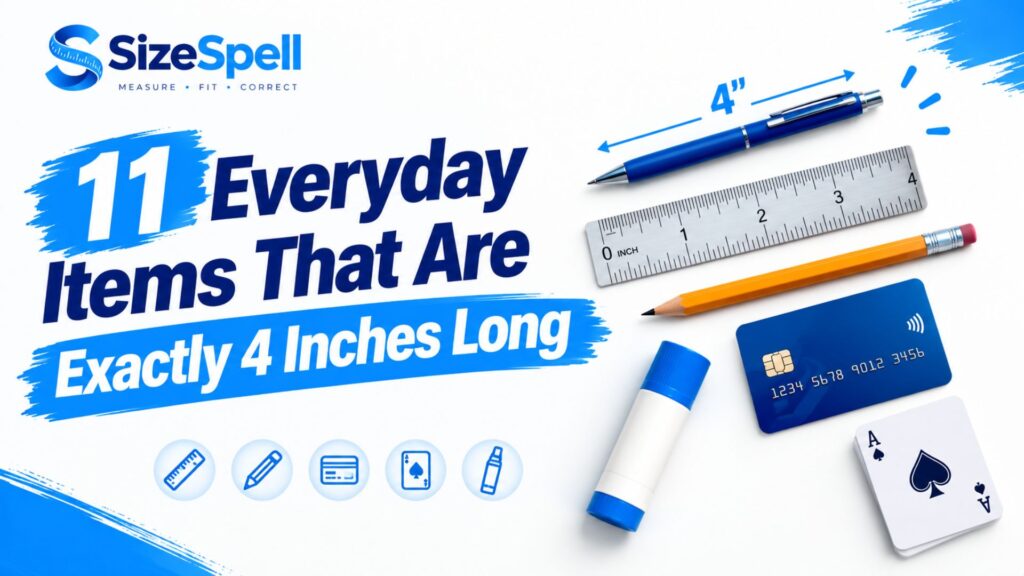
You are standing in a shop, a ruler is nowhere in sight, and a product listing says “4 inches.” Is that big enough for what you need? Most people can’t say for sure, because an inch is easy to read on a tape and surprisingly hard to picture.
That is why a good reference object beats a number every time. Once you can link 4 inches to something you have held a hundred times, you stop guessing. You just know.
This guide shows you 11 everyday items that are about 4 inches long, wide, or across. It explains what 4 inches looks like, why the size is so handy to know, and how to measure it when you have no ruler. Along the way, it points out where popular “4-inch” claims fall a little short, so you can trust what you picture.
How Long Is 4 Inches?
Four inches is 10.16 centimeters, or 101.6 millimeters. It equals exactly one-third of a foot and one-ninth of a yard.
That is the short answer, and here are the conversions in one place.
| Unit | Equal to 4 inches |
| Centimeters | 10.16 cm |
| Millimeters | 101.6 mm |
| Meters | 0.1016 m |
| Feet | 0.333 ft |
| Yards | 0.111 yd |
| Hands (horse measure) | 1 hand |
The last row is a fun one. Horse height is still measured in “hands,” and one hand is defined as exactly 4 inches. The unit came from the width of a human hand, thumb included.
On a standard 12-inch ruler, 4 inches runs from the zero line to the fourth numbered mark. That covers one-third of the whole ruler. If you want a quick mental conversion, remember that one inch is 2.54 cm, so 4 inches is just a little over 10 cm.
Quick Math for Conversions
- To go from inches to centimeters, multiply by 2.54.
- To go from centimeters to inches, divide by 2.54.
- To go from inches to feet, divide by 12.
So 4 × 2.54 gives you 10.16 cm, and 4 ÷ 12 gives you 0.333 feet.
What Does 4 Inches Look Like?
Picture a short, stubby line about as long as the width of an adult palm. Many people find that 4 inches looks smaller in real life than it sounds. The number feels bigger than the object.
Here are a few ways to picture it:
- Slightly longer than a credit card. A standard bank card is about 3.375 inches long, so 4 inches is a little more than that.
- A bit longer than a playing card. A poker-size card is 3.5 inches tall.
- About two-thirds of a dollar bill. A U.S. bill is 6.14 inches long, so 4 inches covers roughly 65 percent of it.
- Close to a hand width. A palm measured across the knuckles usually lands between 3 and 4 inches, depending on the person.
- Shorter than an index card. A 3×5 card is 5 inches on its long side, so 4 inches sits between its two sides.
If you keep only one picture in your head, make it a square sticky note. You will meet it again in a moment.
10 Everyday Things That Are About 4 Inches Long
A quick honesty note before the list. Manufacturers round, trim, and rebrand sizes all the time. Some items below are truly 4 inches by design. Others are “4-inch” by name and land within a fraction of an inch. I have flagged which is which so you can use each one wisely.
1. Post-it Note (4×4 Square)
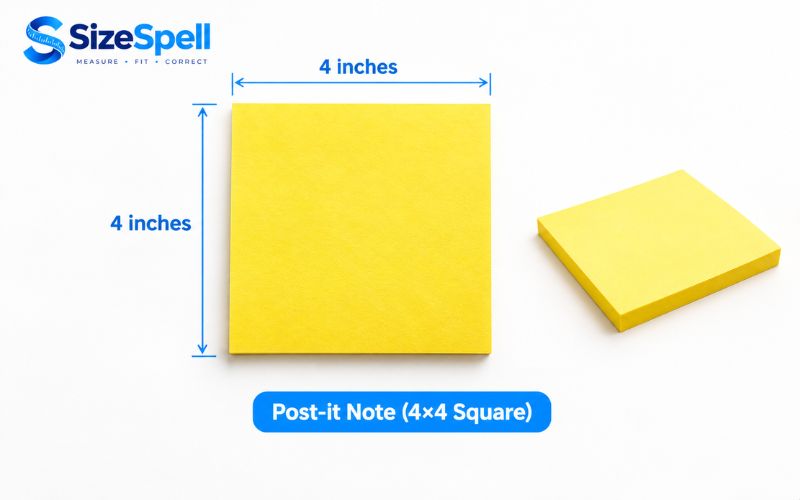
The large square Post-it is a favorite reference object. The 4×4 size measures about 101 mm on each side, which is almost exactly 4 inches.
Because it is flat, you can lay it against any surface and see the length at once. It is also easy to find in most homes and offices, and the adhesive strip lets you stick it up as a quick ruler on a wall or shelf.
Just check the label. The standard small note is 3×3 inches, and many brands sell odd sizes. Look for the “4 in x 4 in” mark on the pad.
2. 4×4 Ceramic Tile
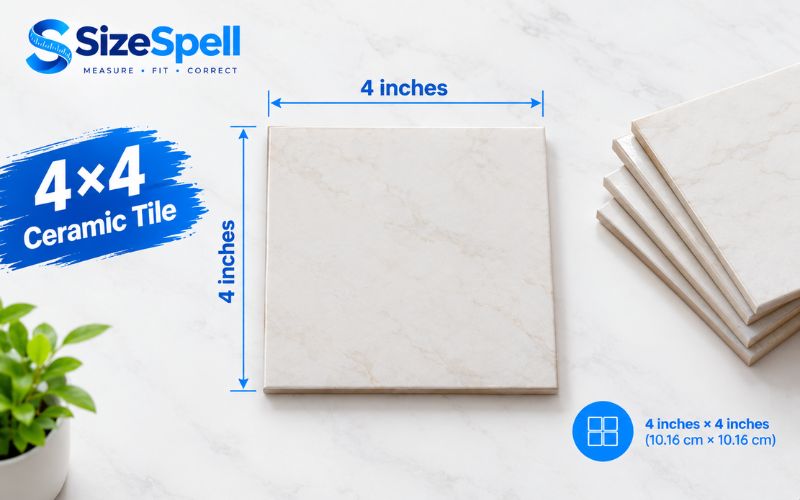
A 4×4 tile is a classic in kitchens and bathrooms. Many are sold under the “4×4” name, and the true size of ceramic wall tile is often 4¼ inches, because the name is nominal.
That quarter inch matters when you are laying out a backsplash. For a quick visual, though, a tile is a solid 4-inch-ish reference. Hold one and you get a feel for the size that sticks in your memory.
If you want an exact check, measure the tile you actually have. Tiles from different makers and eras vary.
3. Square Drink Coaster

Many square coasters, especially cork, wood, and ceramic ones, come in 4×4 inches. That size holds a standard glass without being too bulky for a coffee table.
Look at the coasters near your sofa. If they are square and sold as “4 inch,” you have a ready ruler for a quick estimate. Round coasters also often come at a 4-inch diameter, which is a different but equally useful reference.
4. Mini Photo Print (4×4)

Square photo prints, popular with instant-style and social-media-style printing, often come in a 4×4 format. Printing services list it as a standard square size.
Prints are cut accurately, so they are one of the more reliable 4-inch objects you can find. A stack of them on a shelf or in a frame can also help you plan wall layouts. Frames spaced about 4 inches apart usually look balanced rather than crowded.
Note that the common 4×6 print is not square, so it would give you 4 inches on only one side.
5. Mini Cake Pan (4-Inch Mold)
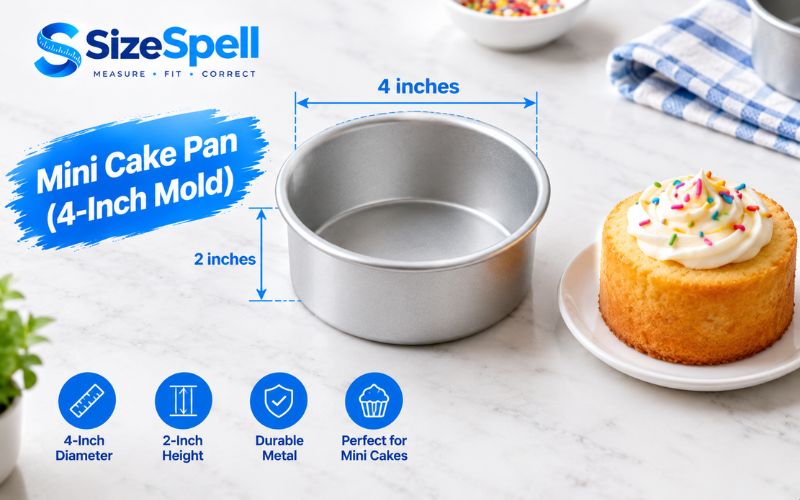
Bakers love the 4-inch cake pan for small celebration cakes and single-serving desserts. The size refers to the inside diameter, so the baked cake comes out close to 4 inches across.
Pans are made to a nominal size, and the exact measurement may vary a little by brand. A flat-bottomed pan is still a great way to picture 4 inches in three dimensions. If you bake, you already own a great ruler.
Pro tip: measure across the inside from rim to rim, not the outside edge, because the outer lip adds length.
6. Electrical Box Depth
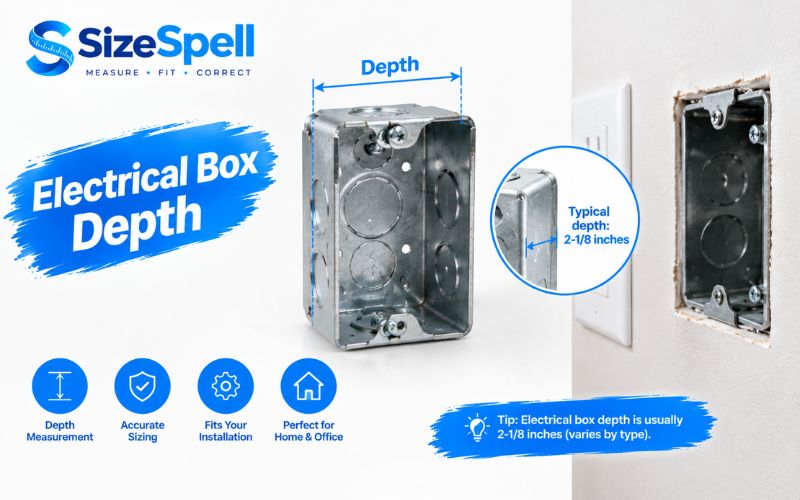
This one needs care. A standard “4-inch square” electrical box measures 4 inches on each side, and the same name is used on boxes sold at any hardware store. Depths are different. They commonly run around 1½ or 2⅛ inches, so do not mix up width with depth.
Electricians often use the 4-inch square box as a mental reference because it fits so many faceplates and covers. If you have a spare one in the garage, it is a rugged little 4-inch square. Just do not assume a “4-inch box” is 4 inches deep.
Never open an energized box to measure it. Switch off power at the breaker, or use an unused box.
7. HVAC Vent Opening

Many round exhaust vents and duct connections are 4 inches in diameter. A standard clothes dryer vent is a well-known example, and a typical bathroom fan duct is often 4 inches as well.
If you can see a vent cap on the side of a house, the hood or pipe is likely close to 4 inches across. It is a quick way to see the size outdoors.
Registers and grilles for room vents come in many sizes, such as 4×10 or 4×12. So here, 4 inches is the short side of the opening.
8. Square Soap Bar

Many boutique and handmade soap bars are cut in a roughly square shape of 3 to 4 inches. Some are exactly 4 inches long, especially bars cut from a standard loaf mold.
Soap is the least standardized item on this list. Think of it as a “close enough” reference rather than a precise one. If you buy artisan bars, check the packaging for the stated size before you use one as a measuring tool.
9. Pocket Mirror (4-Inch Diameter)
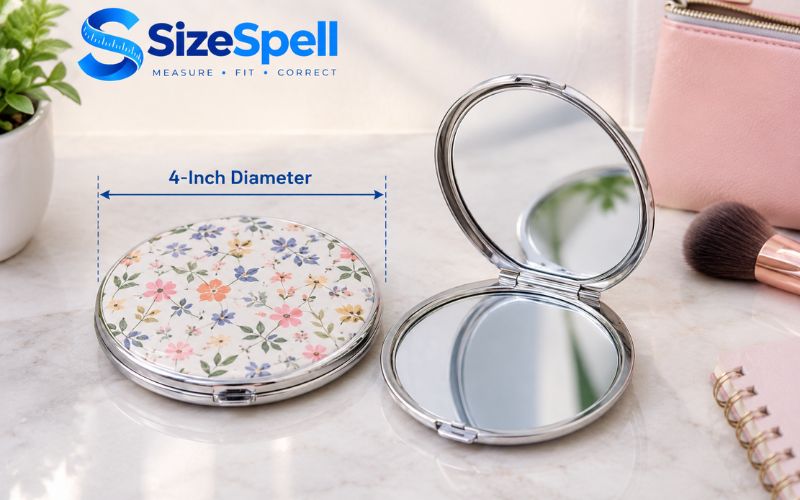
Compact mirrors usually come in small round shapes, and the 4-inch diameter is common for the larger ones. A pocket mirror is a handy item to keep in a bag, so it is a practical reference when you are out.
Measure across the widest point of the glass or the case, and know the two can differ. Case sizes include a hinge and a rim, so the glass itself is often a bit smaller.
10. Craft Foam Square
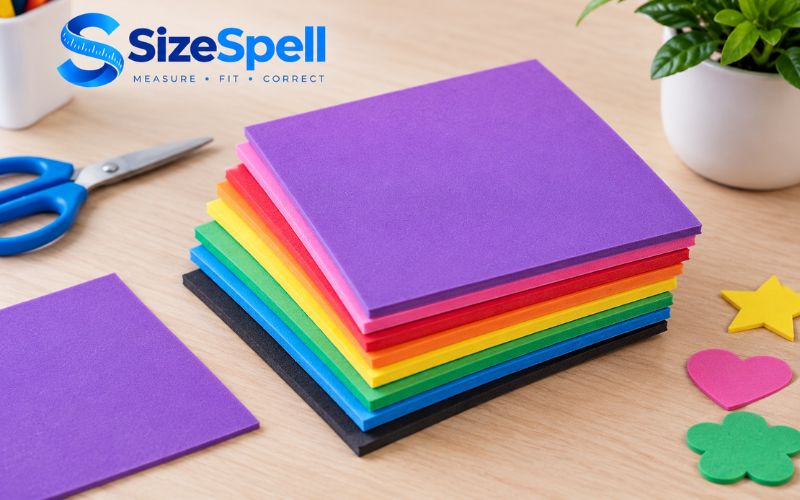
Craft shops sell foam sheets and pre-cut squares in many sizes, and 4×4 is a standard small one for kids’ projects. Foam is easy to cut, so you can trim a square to an exact 4 inches and keep it as a custom template.
That also makes it a great teaching tool. Children can hold the square, compare it to a ruler, and see what 4 inches means with their hands.
Quick Reference Table
| Item | Typical Size | How Reliable? |
| Post-it Note (large square) | 4 × 4 in | High |
| 4×4 ceramic tile | 4 to 4¼ in | Medium |
| Square drink coaster | 4 × 4 in | High |
| Mini photo print | 4 × 4 in | High |
| Mini cake pan | 4 in inside diameter | Medium |
| 4-inch square electrical box | 4 in wide | High (width only) |
| Dryer or fan vent | 4 in diameter | High |
| Square soap bar | About 3 to 4 in | Low |
| Pocket mirror | Often 4 in across | Medium |
| Craft foam square | 4 × 4 in | High |
| Stone coaster tile | 4 × 4 in | High |
Also Read This How Much Is 10 Grams? 15 Everyday Weight Comparisons
Why Knowing 4 Inches Is Useful
It might seem like a tiny detail, but a good sense of 4 inches pays off in many places. It is a size that shows up in homes, workplaces, classrooms, and shops all the time.
Online Shopping
Product photos are famously misleading. A tiny planter and a large one can look identical on a white background. If the listing says 4 inches, you can compare it to a sticky note and know right away how it will look on your desk.
Here is a simple habit that saves returns:
- Find the product dimensions in the description.
- Put an item of the same size, like a coaster, next to your screen.
- Imagine the product beside other things on your shelf.
Items commonly listed in 4-inch sizes include succulent pots, picture frames, phone stands, candles, and small decor pieces.
DIY and Home Projects
In home projects, 4 inches shows up everywhere. Dryer ducts, drain pipes, tile layouts, and the spacing between shelf brackets all use it.
Be careful with lumber. A “4×4” post is not 4 inches by 4 inches. After drying and planing, it measures about 3.5 inches by 3.5 inches. The name is nominal, and many beginners get caught out. Always measure the actual board before you cut.
Handy places where 4 inches matters:
- Round vent and exhaust duct sizes
- Tile and backsplash planning
- Gaps between picture frames
- Cabinet hardware and pull spacing
- Drainage and plumbing parts
School and Office Work
Teachers use 4-inch objects to help students learn measurement. A square note is far more memorable than a printed number. At work, 4×4 labels, stickers, and notes are common, and knowing the size helps you plan how much text fits.
For presentations and printed materials, a 4-inch square is also a common size for a logo or a photo block. Small details like this keep your layouts tidy.
Everyday Estimation
Cooking, sewing, packing, gardening, and gift wrapping all need quick estimates. A 4-inch pot, a 4-inch seam allowance, or a 4-inch gap between plants is easier to hit when you can see the length in your head.
Good estimating also saves time. If you can tell at a glance whether a box will fit a gap or whether a gift fits a bag, you skip a lot of trips to find a ruler.
Why Four Inches Feels So Familiar (Even When We Can’t Explain It)
There is a reason this length seems oddly familiar. The inch has deep roots in the human body. It was once linked to the width of a thumb. And a hand, at 4 inches, was a natural unit for measuring animals, tools, and goods long before rulers were common.
Modern life keeps that size close. Phones, cards, notes, coasters, and photo prints are all designed to fit the hand. When something is made to be held, it tends to land in the range of 3 to 5 inches, because that is what a palm can comfortably cover.
Your brain also tends to remember sizes that you touch every day. That is why people can often guess 4 inches fairly well even without a name for it. The skill is built by repeated experience, not by studying numbers.
Are Everyday Objects Reliable for Measuring Four Inches?
Sometimes, but with limits. Everyday objects are great for a quick visual check, and not so great for work that needs accuracy.
The difference comes down to how the item is made:
| Type of object | Accuracy | Best use |
| Machine-cut items (photo prints, stone tiles, labels) | Very good | Quick checks, planning |
| Standardized parts (vents, ducts, boxes) | Good | Home projects, shopping |
| Nominal-size items (4×4 tile, lumber) | Fair | Rough estimates only |
| Handmade or natural items (soap, craft pieces) | Low | Casual comparison |
A few things can throw you off:
- Nominal sizes. A name like “4×4” does not always match the real measurement.
- Rounded or beveled edges. These change where you start and stop measuring.
- Wear and shrinkage. Foam, paper, and soap can change over time.
- Different brands. Two products with the same label may differ by a fraction of an inch.
The rule is simple. If a mistake of a quarter inch would not hurt, use a reference object. If it would, use a ruler or tape measure. For anything involving cutting, fitting, or sewing, always confirm with a real measuring tool.
How to Measure 4 Inches Without a Ruler
Sooner or later, you will need a length and have no ruler. Here are three simple methods, from quickest to most accurate. Each works best when you calibrate it once against a real ruler. Do that once, and you will carry a reliable reference everywhere.
Method 1: Using Your Fingers
Your hand is a measuring tool you never leave behind. The trick is to learn your own measurements, because hands vary.
- Place your hand flat beside a ruler.
- Measure the width of your palm across the four fingers, just below the knuckles.
- Measure the width of your thumb at the widest point, which is often close to 1 inch.
- Note the result and remember it.
For many adults, the palm measures between 3 and 4 inches. If yours is exactly 4, you are set. If it is 3½, you will know to add half an inch. Either way, you now have a personal, portable gauge.
Tip: Use the same hand and the same posture each time, and keep your fingers together and flat.
Method 2: Using a 4×4 Post-it Note
This is the cleanest option if you have one nearby. A large square note is about 4 inches on each side, so it works as a ready-made guide.
- Place the note along the edge of the object you want to measure.
- Line up one edge with the start point.
- Mark where the opposite edge falls.
Use the sticky strip to hold it in place while you work. You can also stick a few notes in a row to measure longer lengths, such as 8 or 12 inches.
Check the size on the pad first. Not every square note is 4 inches, and the common smaller version is 3 inches.
Method 3: Using a Dollar Bill
A U.S. dollar bill is 6.14 inches long and about 2.61 inches wide, which makes it a decent backup tool. Four inches is roughly two-thirds of its length, so you can find it by folding.
- Lay the bill flat on a table.
- Fold one end in about a third of the way, so that the bill is split into three roughly equal parts.
- Two of those parts together give you about 4.1 inches.
The result is within a tenth of an inch. That is close enough for most casual checks.
If you do not use U.S. currency, you can use any bank card as a starting point. A standard card is about 3.375 inches long, so you would add roughly five-eighths of an inch to reach 4.
A Bonus Check: Use Your Phone
Many phones include a measuring app that uses the camera to estimate length. These are helpful for a rough check. Treat them as an estimate, since lighting, angle, and surface can all shift the reading.
Common Mistakes People Make
Even a short measurement can go wrong. These are the errors that show up most often.
- Trusting the product name. A “4×4” tile or post is rarely exactly 4 inches. Always read the actual dimensions.
- Confusing width with depth. Boxes, pots, and pans list different sizes for different directions. Check which one the label means.
- Reading the ruler at an angle. Looking from the side shifts the mark. Look straight down at the scale to avoid this problem, which is called parallax error.
- Starting at the wrong place. Many rulers have a small gap before the zero mark. Some tapes have a movable hook at the end. Start from zero, and keep the hook flat against the edge.
- Mixing up diameter and radius. A 4-inch circle is 4 inches across, which means it has a radius of 2 inches.
- Ignoring rounded edges and lips. Measure from the same reference point on each side.
- Using one object for every job. Your thumb or a sticky note works for rough checks. It is not a substitute for a ruler on a project that needs a precise fit.
- Mixing metric and imperial. If a label shows both, double-check which number you are reading. Four inches is 10.16 cm, not 4 cm. A 4 cm length is only about 1.57 inches.
A good habit is to measure twice and write the number down. It takes a few seconds and prevents most mistakes.
More Size Guides You Might Find Helpful
If this guide was useful, these related sizes are worth looking up next. Each one works the same way, by pairing the number with a familiar object.
- What does 2 inches look like?
- How long is 3 inches?
- How long is 5 inches?
- How long is 6 inches?
- How big is 10 centimeters?
- How long is 12 inches (one foot)?
FAQs
How long is 4 inches in centimeters?
Four inches equals 10.16 centimeters, or 101.6 millimeters. Multiply inches by 2.54 to convert.
What is 4 inches the same as in feet?
Four inches is one-third of a foot, or about 0.333 feet.
What common object is exactly 4 inches long?
A large square Post-it note, a square photo print and many stone or cork coasters are all about 4 inches on each side. A dryer vent is also about 4 inches across.
Is a credit card 4 inches long?
No. A standard credit card is about 3.375 inches long, so 4 inches is a little longer.
How wide is a hand in inches?
An adult palm, measured across the four fingers, is usually 3 to 4 inches wide. Measure your own hand once so you know your personal size.
Is a 4×4 post really 4 inches?
No. A 4×4 post measures about 3.5 by 3.5 inches after drying and planing. The name is nominal.
How can I measure 4 inches without a ruler?
Use a large square Post-it note, a folded dollar bill, or your own palm after checking it against a real ruler.
Is 4 inches big or small?
It is a small to medium length. It feels bigger as a number than it looks in real life.
Conclusion
Four inches is small, but it is a size you handle every day without noticing. It is the width of a palm, the side of a large sticky note, and the diameter of a dryer vent. Once you can picture it, product listings, home projects, and quick estimates all get easier.
Remember the main points. Four inches equals 10.16 cm, or one-third of a foot. Items like a 4×4 Post-it, a square coaster, a photo print, and a stone tile are among the most dependable references. Others, like ceramic tile, soap, and lumber, only come close, so treat them as rough guides.
When accuracy matters, reach for a ruler or tape measure, and read it straight on. When it does not, trust your eye, your hand, and the everyday objects around you. With a little practice, you will spot 4 inches before you ever pick up a ruler.

1 thought on “11 Everyday Items That Are Exactly 4 Inches Long”