


Ten grams is a weight most of us never feel. It is too small to notice in a bag and too big to ignore in a recipe, a supplement dose, or a postage estimate. So when a label or a recipe says “10 g,” what are you actually dealing with?
10 grams is about 0.35 ounces, or roughly one-third of an ounce. In your kitchen it is a little over two teaspoons of water, about two and a third teaspoons of sugar, or one and a quarter tablespoons of flour. In your pocket it is two US nickels.
This guide gives you exact conversions, fifteen comparisons you can hold in your head, simple ways to estimate 10 grams with no scale, and a spoon-and-cup breakdown for common ingredients. Every coin and ingredient figure comes from published sources, and I flag where numbers vary.
How Much Is 10 Grams?

A gram is a unit of mass in the metric system. It is one-thousandth of a kilogram. Ten grams is therefore 0.01 kg, or 10,000 milligrams.
For people used to US units, the quick rule is simple. One ounce is 28.35 grams, so 10 grams is about 35% of an ounce. Think “a third of an ounce,” and you will be close enough for most daily tasks.
One small technical note for accuracy. Grams measure mass, not weight. Weight is the pull of gravity on that mass. In everyday talk, people use “weight” for both, and this article does too. At Earth’s surface, 10 grams of mass presses down with a force of about 0.098 newtons.
10 Grams Conversion Chart
Use this chart when you need 10 grams in another unit. Values are rounded to a useful number of decimal places.
| Unit | Equal to 10 grams |
| Milligrams (mg) | 10,000 mg |
| Kilograms (kg) | 0.01 kg |
| Ounces (oz) | 0.353 oz |
| Pounds (lb) | 0.0220 lb |
| Troy ounces (ozt) | 0.322 ozt |
| Grains (gr) | 154.3 gr |
| Carats (ct) | 50 ct |
| Pennyweights (dwt) | 6.43 dwt |
Two quick checks that help in the real world:
- To convert grams to ounces, divide by 28.35. For 10 grams, 10 ÷ 28.35 = 0.353.
- To convert ounces to grams, multiply by 28.35. So one-third of an ounce is about 9.4 grams.
Jewelers and precious-metal buyers often use troy ounces, which are heavier than standard ounces. A troy ounce is 31.1 grams, so 10 grams is a bit under a third of one.
Common Things That Weigh About 10 Grams
Before the full list, here is a short cheat sheet. These are the easiest anchors to remember.
- Two US nickels (exactly 10.0 g)
- Four US pennies (exactly 10.0 g)
- Ten standard paper clips (about 10 g)
- Two grapes (about 10 to 11 g)
- Two sheets of ordinary printer paper (about 9 to 10 g)
The table below adds the full set, with the numbers behind each one.
| Item | Typical weight | Match to 10 g |
| 2 US nickels | 5.0 g each | Exact |
| 4 US pennies | 2.5 g each | Exact |
| 1 US half dollar | 11.34 g | Close (+1.3 g) |
| 10 paper clips | about 1 g each | Close |
| 1 dollar coin | 8.1 g | Light (−1.9 g) |
| 2 grapes | 5.1 to 5.7 g each | Close |
| 1¼ tbsp all-purpose flour | 7.8 g per tbsp | Close |
| 2⅓ tsp granulated sugar | 4.2 g per tsp | Close |
| 2 tsp butter | 4.7 g per tsp | Close (9.4 g) |
| 1½ tsp honey | 7.1 g per tsp | Close (10.7 g) |
| 1¾ tsp table salt | 5.7 g per tsp | Close |
| 2 tsp water | 4.9 g per tsp | Close (9.8 g) |
| Pair of earbuds | about 4.3 g each | Light (8.6 g) |
| 5 tea bags’ worth of leaves | about 2 g each | Close |
| 2 sheets printer paper | about 4.5 to 5 g each | Close |
How Big Is 10 Grams?
Size and weight are different things, and 10 grams shows it well. The same 10 grams can be tiny or large depending on what it is made of.
- Solid gold: With a density of about 19.3 grams per cubic centimeter, 10 grams of gold is a ball about 1 centimeter across, roughly the size of a pea.
- Water: 10 grams is 10 milliliters. As a ball, that is about 2.7 centimeters across.
- Flour: About a heaping tablespoon, though it depends on how packed it is.
Keep that idea in mind as you read the list. Small and heavy, or big and light, can both land on 10 grams.
14 Things That Weigh About 10 Grams
A note before we start. Many online lists claim that pen caps, AA batteries, or single keys weigh 10 grams. They usually do not. A standard paper clip is about 1 gram, and an alkaline AA battery is around 24 grams. I replaced the weak matches with items whose weights are published or easy to calculate.
1. Two US Nickels
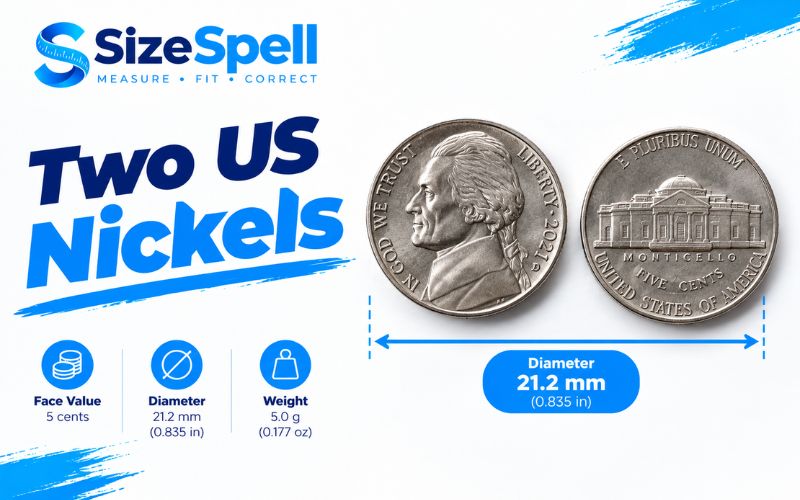
This is the cleanest match there is. The US Mint lists a nickel at exactly 5.000 grams, so two nickels weigh 10.0 grams.
If you carry coins, you already own a reliable 10-gram weight. Place two nickels in your palm and remember the feeling. It is the single best reference in this article.
2. Four US Pennies

The US Mint lists a penny at 2.500 grams. Four pennies make exactly 10 grams.
This works for pennies minted since 1982, when the coin switched to a copper-plated zinc core. Older copper pennies weigh more, about 3.1 grams, so check the date if you need precision.
3. One US Half Dollar
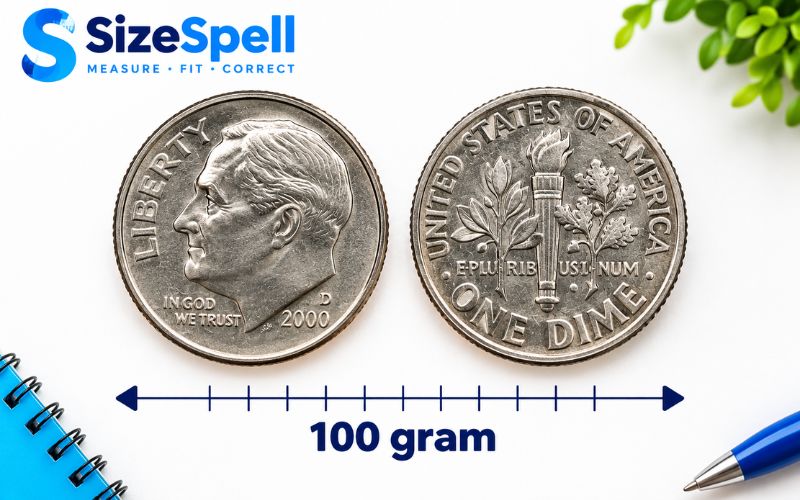
A half dollar weighs 11.340 grams, according to the US Mint. That is just over 10 grams, so it makes a good “slightly heavy” reference.
It also helps you sense the gap. If a half dollar feels a touch heavier than what you are weighing, your object is probably under 11 grams.
4. Ten Standard Paper Clips
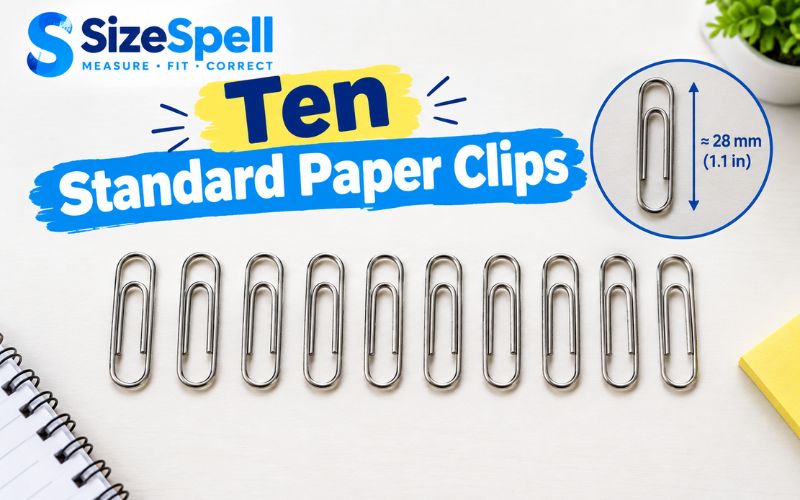
A standard paper clip weighs about 1 gram. Jumbo clips run 1.5 to 2 grams. So a small handful of ten regular clips lands near 10 grams.
Office supplies make great practice weights because they are consistent and cheap. Keep a box of clips near your kitchen scale and use them to test it.
5. One Dollar Coin
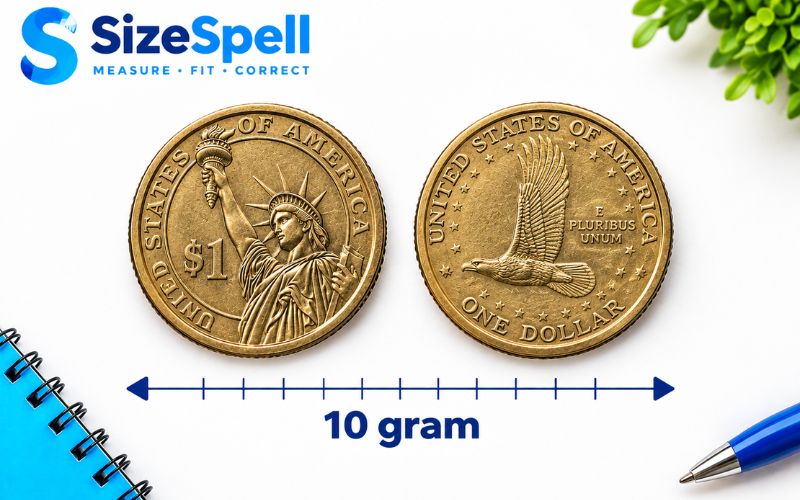
The US dollar coin weighs 8.1 grams. It is lighter than 10 grams by about two grams.
Use it with a penny, and you have 10.6 grams. Add a dime instead, and you get 10.4 grams. These small combinations help you build 10-gram checks out of loose change.
6. Two Grapes
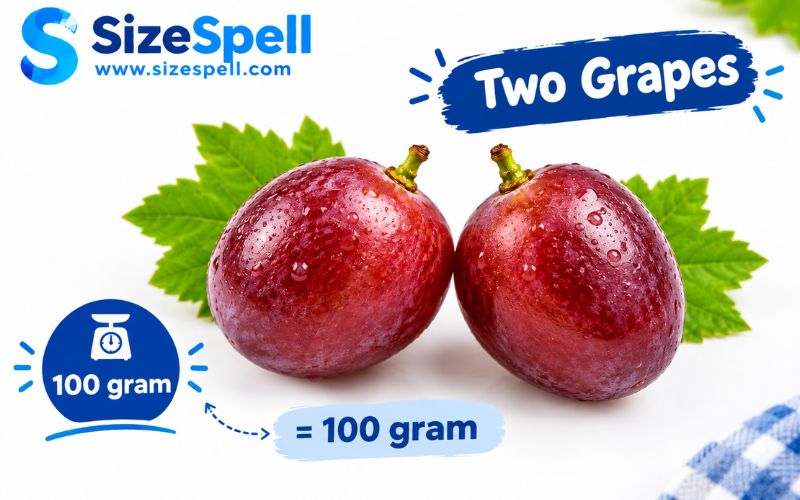
A seedless grape averages about 5.1 to 5.7 grams, depending on variety and ripeness. Two grapes therefore weigh about 10.2 to 11.4 grams.
Fresh produce is never exact, but this one is close. It is a good picture for nutrition labels. When a snack lists 10 grams of sugar, imagine the weight of two grapes.
7. About 1¼ Tablespoons of All-Purpose Flour
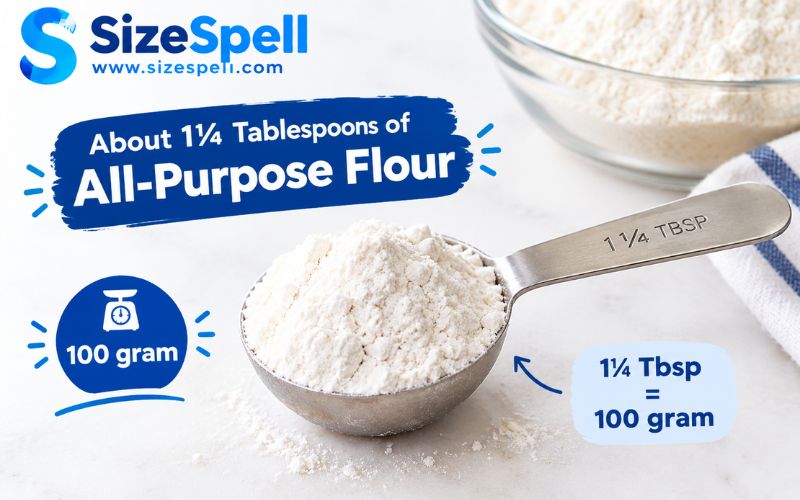
Flour is light and airy. One tablespoon weighs about 7.8 grams, so 10 grams is a little over a tablespoon. That is nearly four teaspoons.
Flour is the ingredient that fools bakers most. Scooped from the bag, it packs down and weighs more per spoon. Spooned lightly into a measure, it weighs less.
8. About 2⅓ Teaspoons of Granulated Sugar
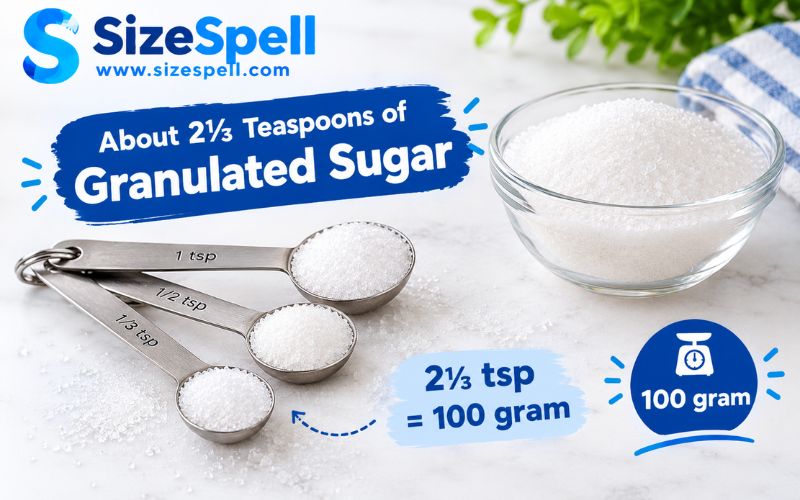
Sugar weighs about 4.2 grams per teaspoon. That makes 10 grams about 2.4 teaspoons, or a little under a tablespoon.
This is useful for health reading. Sugar has about 4 calories per gram, so 10 grams of sugar is roughly 40 calories. Seeing it as two and a third spoonfuls helps you judge a drink or cereal label.
9. Two Teaspoons of Butter
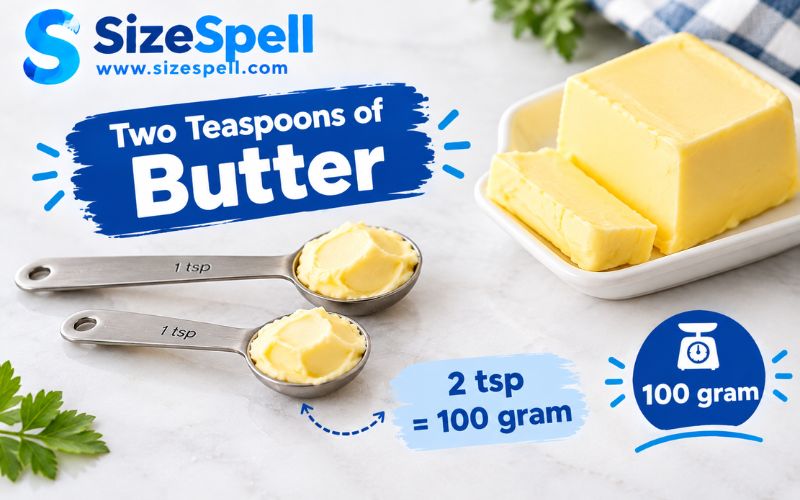
Butter runs about 4.7 grams per teaspoon, so two level teaspoons weigh about 9.4 grams. Ten grams is a hair over that.
On a standard US stick of butter, 10 grams is a thin slice, about one-eleventh of the stick (a stick is about 113 grams).
10. About 1½ Teaspoons of Honey

Honey is dense. One teaspoon weighs about 7.1 grams, so 10 grams is only about 1.4 teaspoons.
This shows how much weight depends on the material. The same spoon holds almost twice as much weight in honey as it does in flour.
11. About 1¾ Teaspoons of Table Salt
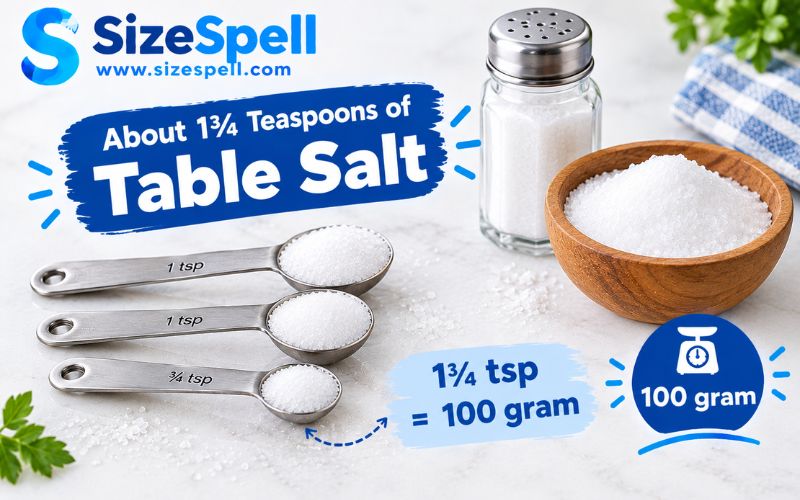
Fine table salt weighs roughly 5.7 grams per teaspoon, so 10 grams is a little under two teaspoons.
Salt crystals vary by brand. Coarse kosher salt takes up more space, so a teaspoon of it weighs less. Use a scale if the recipe is sensitive.
12. Two Teaspoons of Water
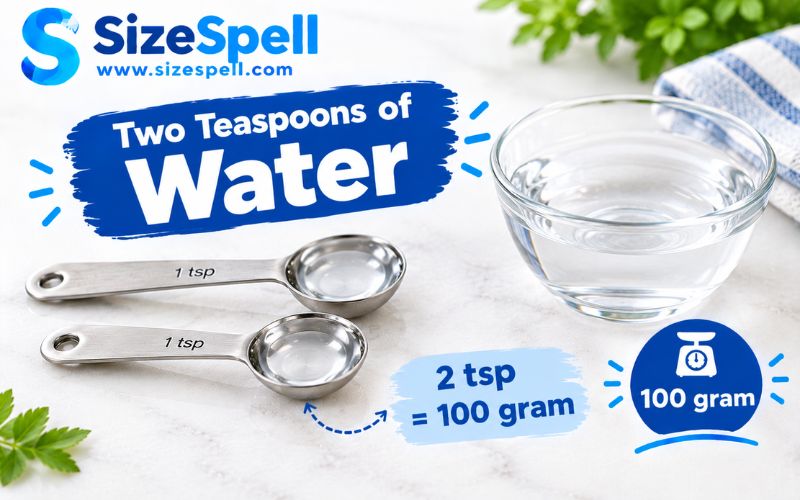
Water is the reference for the entire metric system. One gram of water is about one milliliter. So 10 grams of water is 10 milliliters.
A teaspoon holds about 4.9 milliliters, which makes two teaspoons about 9.8 grams. That is very close, and it gives you an easy test: pour 10 milliliters into a measuring cup, and you have 10 grams of water.
13. A Pair of Earbuds

Apple lists about 4.3 grams for each earbud in its current AirPods specifications. A pair is about 8.6 grams. Wired earbuds with a cable are often a bit heavier, though models differ.
The charging case is a different story. It weighs more than 30 grams on its own.
14. Two Sheets of Printer Paper
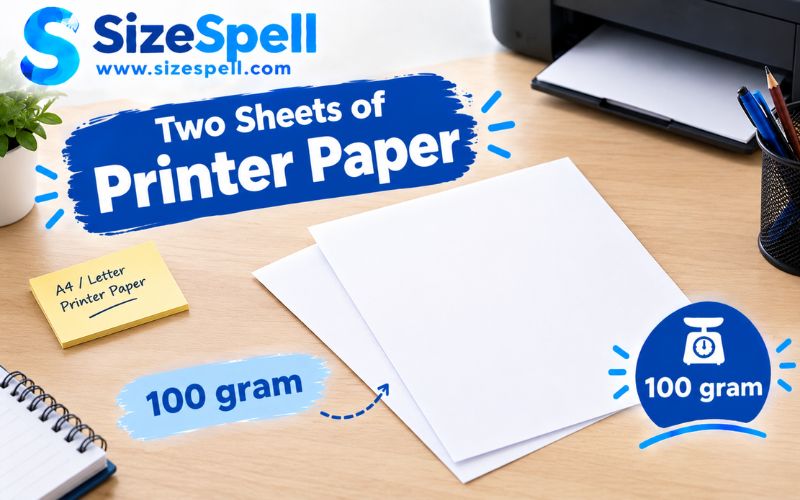
A sheet of A4 paper at 80 grams per square meter weighs about 5 grams. A US letter sheet of common 20-pound bond is a little lighter, about 4.5 grams. Two sheets land between 9 and 10 grams.
Mailers use this trick often. A short letter with an envelope is a handy way to feel how light 10 grams really is.
Also Read This How Long Is 200 Feet? 9 Real-World Comparisons
What Does 10 Grams Feel Like?
In your hand, 10 grams feels almost like nothing. It is lighter than an alkaline AA battery, which weighs around 24 grams, and lighter than a lithium AA, which weighs about 14 grams.
Here is how to build a feel for it:
- Palm test: Hold two nickels in your open hand. Note how they sit. That is 10 grams.
- Pinch test: Pinch a stack of ten paper clips. You should barely feel the load.
- Compare with a battery: Hold an AA battery in one hand and two nickels in the other. The battery is more than twice as heavy.
- Tilt test: Place two nickels on a flat ruler balanced on a pencil. Add paper clips to the other side until it levels. You will need about ten.
The mind tends to overestimate small weights when they are dense and underestimate them when they are fluffy. Two nickels feel heavier than a pile of flour of the same mass. Do not trust your hand for precise work. Use a scale.
Where 10 Grams Matters
Ten grams shows up more often than you might expect:
- Cooking and baking: Yeast, baking powder, salt, and spices are often listed in single-digit grams.
- Nutrition: Protein and fiber targets, and sugar limits on labels, are often stated per 10 grams. Sugar and protein both carry about 4 calories per gram, and fat carries about 9.
- Jewelry and metals: Small chains, rings, and coins are commonly sold by the gram.
- Postage and crafts: Light items like letters and cards need exact weights.
For anything medical, such as medicine or supplements, never rely on a kitchen scale or on a home estimate. Follow your pharmacist’s or doctor’s directions.
How to Estimate 10 Grams Without a Scale
You can get close to 10 grams with objects you already own. Use these methods in order of accuracy.
- Use coins. Two nickels, four pennies, or one nickel and two pennies each weigh exactly 10 grams.
- Use paper clips. Ten standard clips weigh about 10 grams. This is good to within a gram or so.
- Use water. Pour 10 milliliters into a small cup. Use a medicine syringe or a marked measuring spoon set for the best result.
- Use spoon conversions. See the next section for common ingredients.
- Use a balance. Place your item on one side of a homemade balance and coins on the other.
Here are the coin combinations in one table:
| Coin combination | Total weight |
| 2 nickels | 10.00 g |
| 4 pennies | 10.00 g |
| 1 nickel + 2 pennies | 10.00 g |
| 1 quarter + 1 dime + 1 penny | 10.44 g |
| 1 half dollar | 11.34 g |
| 1 dollar coin + 1 penny | 10.60 g |
Weights come from US Mint specifications.
A few tips for better accuracy:
- Measure on a flat, level surface.
- Keep the scale away from drafts and vibration.
- Zero the scale with the empty container on it before you add anything.
- Know your tool. Many kitchen scales are accurate to about a gram, so a 10-gram reading could be 9 or 11. A pocket scale with 0.1 gram resolution is a better choice for small amounts.
10 Grams in Teaspoons and Cups: The Full Breakdown
Converting grams to spoons depends on the ingredient. A teaspoon of honey weighs far more than a teaspoon of flour. The table below shows what 10 grams looks like for common items.
| Ingredient | Grams per teaspoon | 10 g in teaspoons | 10 g in tablespoons | 10 g in cups |
| Water | 4.9 g | 2.0 tsp | 0.68 tbsp | about 1/24 cup |
| Granulated sugar | 4.2 g | 2.4 tsp | 0.79 tbsp | about 1/20 cup |
| Table salt | 5.7 g | 1.75 tsp | 0.58 tbsp | about 1/27 cup |
| All-purpose flour | 2.6 g | 3.8 tsp | 1.28 tbsp | about 1/12 cup |
| Butter | 4.7 g | 2.1 tsp | 0.71 tbsp | about 1/23 cup |
| Honey | 7.1 g | 1.4 tsp | 0.47 tbsp | about 1/34 cup |
| Baking powder | 4.6 g | 2.2 tsp | 0.72 tbsp | about 1/22 cup |
How to read the table: these figures use common kitchen-reference values, and a US cup equals 48 teaspoons. Different charts disagree slightly. For example, one source lists salt at 5.7 grams per teaspoon and another rounds it to 6. Humidity, brand, and how you fill the spoon all matter.
Why Cups Are Tricky
A cup is a measure of volume, and volume depends on how much air sits between the particles. A cup of flour can weigh 120 grams if spooned lightly or well over 140 grams if scooped and packed. That is the reason serious bakers weigh ingredients. For 10 grams, the difference is tiny in cups but real in a recipe.
If a recipe lists grams, use grams. It will give you the same result every time.
10 Grams vs. Other Common Weights
Putting 10 grams next to other weights shows where it sits on the scale.
| Weight | Grams | Compared with 10 g |
| 1 paper clip | about 1 g | One tenth |
| 1 nickel | 5 g | Half |
| 10 grams | 10 g | Baseline |
| Lithium AA battery | about 14 g | 1.4 times |
| Alkaline AA battery | about 24 g | 2.4 times |
| 1 ounce | 28.35 g | 2.8 times |
| 1 stick of US butter | about 113 g | 11 times |
| 1 pound | 453.6 g | 45 times |
| 1 kilogram | 1,000 g | 100 times |
Two comparisons are worth remembering. Ten grams is only about a third of an ounce. And 10 grams is one hundredth of a kilogram, so a kilogram bag of sugar holds the equivalent of one hundred 10-gram portions.
Common Misconceptions About 10 Grams
1. Ten Grams Is Heavy
It is not. Ten grams is about the weight of two coins. Most people picture something much heavier, in part because they confuse grams with ounces or mix up 10 grams with 10 ounces. Ten ounces is 283.5 grams, which is over twenty-eight times heavier.
The mix-up between grams and kilograms is also common. A kilogram is 1,000 grams. A recipe that needs 10 grams and a recipe that needs 10 kilograms are not even close.
2. Small Objects Always Weigh Less
Size is not a reliable guide to weight. A pea-sized ball of gold weighs about 10 grams, but a ball of water that weighs the same would be nearly three centimeters across. A light, airy item such as flour or cotton takes up far more space than a dense metal of the same weight.
When you shop for jewelry, spices, or craft supplies, check the listed weight rather than guessing from how large something looks.
3. Weight and Size Are the Same
Weight tells you how heavy something is. Size tells you how much space it takes up. Two objects can have the same weight and very different sizes, or the same size and very different weights. That is why a teaspoon of salt and a teaspoon of flour weigh different amounts, and why a cup is a poor way to measure dry ingredients.
The fix is to use the right tool. For weight, use a scale. For volume, use measuring spoons and cups. Convert between them only when you know the ingredient.
FAQs
How much is 10 grams in ounces?
10 grams is about 0.353 ounces, or roughly one-third of an ounce.
How many teaspoons is 10 grams?
It depends on the ingredient. For water, it is about 2 teaspoons. For sugar, about 2.4 teaspoons. For flour, almost 4 teaspoons. For honey, about 1.4 teaspoons.
What coins weigh 10 grams?
Two US nickels, four US pennies (minted since 1982), or one nickel plus two pennies each weigh exactly 10 grams.
Is 10 grams a lot of sugar?
Ten grams of sugar is about 2.4 teaspoons and roughly 40 calories. It is a modest amount on its own, but sweet drinks and snacks can add up quickly.
How many paper clips weigh 10 grams?
About ten standard paper clips, since a typical clip weighs around 1 gram.
Is 10 grams the same as 10 milliliters?
Only for water and liquids with similar density. Ten grams of water is 10 milliliters. Oil takes up more space per gram, and honey takes up less.
How can I measure 10 grams without a scale?
Use two nickels, four pennies, ten paper clips, or 10 milliliters of water. Spoon conversions work for common ingredients, though they are less exact.
Conclusion
Ten grams is a small weight with a surprising number of reference points. It is two US nickels or four pennies, about ten paper clips, two grapes, or two sheets of printer paper. In a kitchen it is a little over two teaspoons of water, about two and a third teaspoons of sugar, or roughly a tablespoon and a quarter of flour.
Remember three anchors: 10 grams is about a third of an ounce, two nickels weigh exactly 10 grams, and 10 grams of water is 10 milliliters. Those alone will carry you through most recipes, labels, and quick estimates.
When accuracy matters, such as baking, jewelry, or anything health-related, use a digital scale and follow professional guidance. For everything else, a pair of nickels in your palm is a handy way to feel how light 10 grams really is.

1 thought on “How Much Is 10 Grams? 15 Everyday Weight Comparisons”